
Why buying from veteran-owned businesses really matters
Why buying from veteran-owned businesses really matters
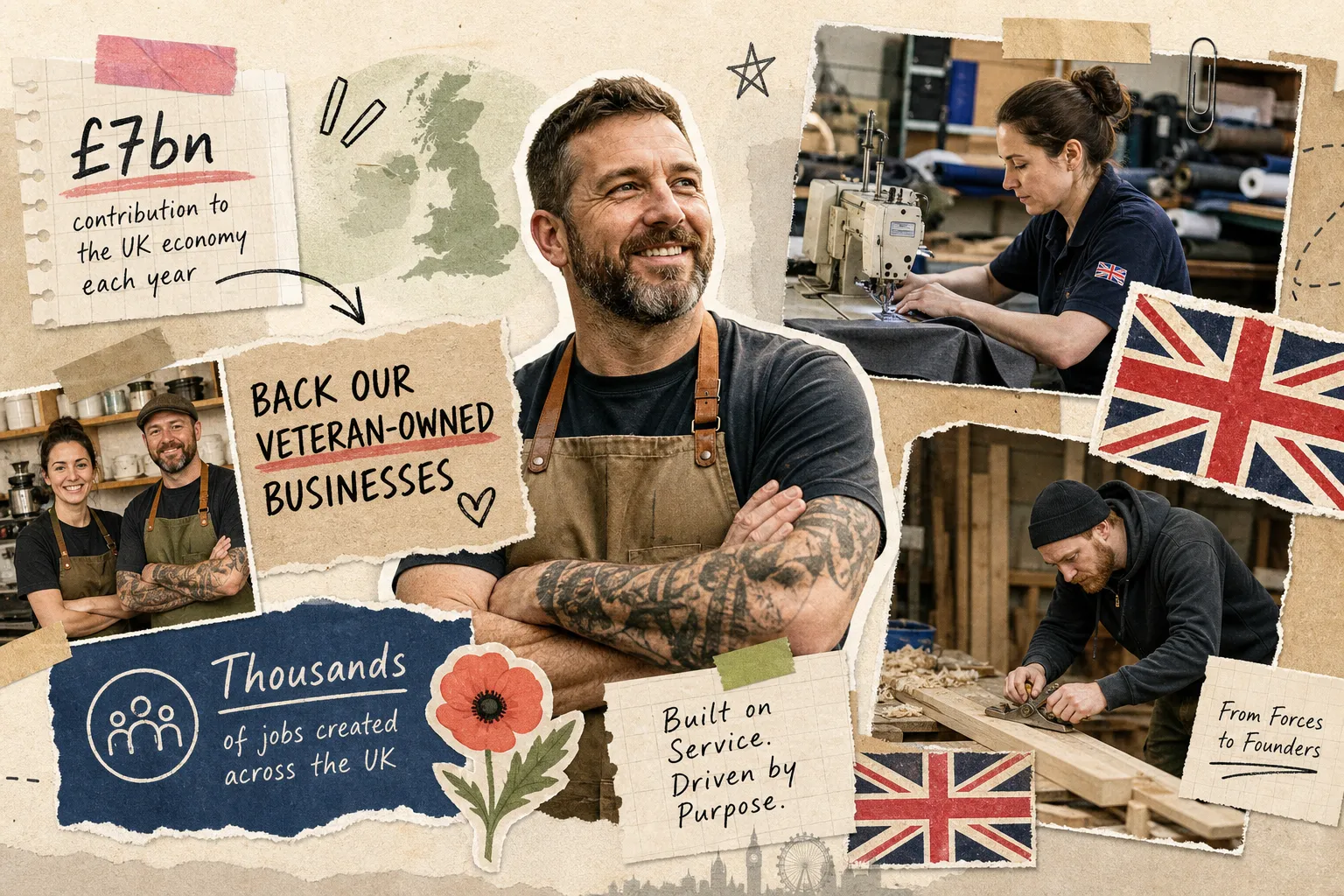
If you've ever asked yourself why should I buy from veteran-owned businesses in the UK, the answer is both practical and measurable, not sentimental. Most people buy on price, convenience, or habit. They rarely think about who built the business behind the product, where the profit goes, or what the founder's life looked like before they started the company. That indifference is understandable. But it does have a cost, and it is worth knowing what that cost is.
Around 340,000 veteran-owned businesses operate across the United Kingdom, according to industry sector estimates. Together, more than 1,000 of the most active veteran-led companies generate approximately £7 billion in turnover and employ over 30,000 people. These are not passion projects or side hustles. They are real businesses, with an average revenue of around £6 million and roughly 28 employees each. Military Humor Stores is part of that economy: a veteran-founded retailer built by two ex-British Army servicemen whose combined service shapes every product they make and every pound they reinvest. The case for choosing veteran-owned businesses in the UK over generic alternatives is not sentimental. It is practical, documented, and worth making clearly.
The scale of veteran-owned business in the UK is bigger than most people realise
The 340,000 figure tends to surprise people. Most public conversation about veterans focuses on welfare, mental health support, and charitable provision. Commerce barely gets a mention. Yet veteran entrepreneurs are a significant and underreported part of the UK's small business economy, and the numbers back that up.
The 1,000-plus active veteran-led companies tracked by industry sources represent only the more visible segment of that 340,000 total. They account for £7 billion in turnover and more than 30,000 jobs. That is a meaningful economic contribution by any measure, and it receives almost no mainstream coverage. The framing of veterans as recipients of support, rather than generators of it, is both inaccurate and limiting.
The employment effect is particularly concentrated. Veteran-owned businesses often operate in, or hire from, communities with strong military connections: garrison towns such as Catterick, Aldershot, Colchester, and Tidworth, where ex-service populations are dense and local economic alternatives can be thin. A veteran-owned business that survives and grows in one of those towns creates jobs in a place where they genuinely matter. The ripple is local, not diffuse.
This economic story deserves more attention than it gets. When the veteran community is discussed in policy or media, the narrative tends toward need and cost. The reality is that veterans are also building things, employing people, and generating tax revenue. Both things can be true simultaneously, but only one of them gets the column inches.
What your purchase actually funds beyond the product itself
Buying from a veteran-owned business is a commercial transaction, not an act of charity. You get something in return. But the downstream effects of that transaction differ materially from buying the same product through an anonymous marketplace platform, where the margin disappears into a logistics chain with no visible human outcome at the end of it.
The connection between purposeful work and mental health among veterans is documented at a general level in international research, though UK-specific entrepreneurship studies remain limited. Structured, identity-building work reduces isolation, creates daily routine, and replaces the strong sense of belonging that service provides and civilian employment often does not. For veterans, building a business around genuine expertise, for a community they understand personally, carries psychological value that wage employment in an unfamiliar sector frequently cannot match.
Veteran-owned businesses also tend to employ other veterans, mentor personnel transitioning out of service, and build informal networks that ease civilian adjustment. This is reintegration in practice: income-generating, self-sustaining, and run by people who have navigated the same transition. Organisations like X-Forces Enterprise and Heropreneurs provide the scaffolding, but veteran entrepreneurs themselves create the structures that actually carry people through.
When money circulates within the veteran business community, it is reinvested by people with a direct stake in what the community still needs. The contrast with buying from a faceless third-party platform, where no portion of the margin touches anything veteran-related, is not complicated. The difference is simply where the money ends up and what it does when it gets there.
Military Humor Stores: what veteran reinvestment looks like in practice
Military Humor Stores was founded by two ex-British Army servicemen who bring real service experience to every product decision the company makes. That is not a marketing line. It is the reason the humour lands, the references are accurate, and the designs resonate with people who have actually served, rather than people who simply find camouflage aesthetically pleasing.
The product range reflects genuine barrack-room culture, including our keyrings. The British Army slang on a t-shirt is correct because the people who wrote it were in the room when it was used. The in-jokes work because the founders lived them. Mass-market military merchandise tends toward surface-level aesthetics: eagles, flags, skulls, vague toughness. Military Humor Stores operates from actual experience, which produces something categorically different and far more meaningful to its core audience of veterans, serving personnel, and military families.
The reinvestment is deliberate. The ENDEX COMIC series treats British military humour as a legitimate creative tradition worth preserving, not merely a product category worth monetising. Regimental pride, service identity, and the specific texture of British Army life are built into the brand's foundation rather than grafted on for marketing purposes. That is what veteran ownership looks like when the founders genuinely know the community they are building for.
Military Humor Stores is not an exception among veteran-owned businesses in the UK. It is representative of what happens when a business is built around genuine experience rather than borrowed brand equity. The authenticity is not incidental. It is the product.
Why should I buy from veteran-owned businesses in the UK: the reliability case
This is where the sceptic's question is worth addressing directly. Is there actual evidence that veteran-owned businesses are more reliable, or is that a feel-good narrative attached to a purchasing decision that could be justified on other grounds? The evidence points to specific, measurable traits rather than vague character claims.
Military training builds capabilities that transfer directly to commercial operations: deadline management under pressure, resource discipline when margins are tight, clear accountability structures, and a consistent bias toward mission completion over excuse-making. These traits are well documented in case studies of veteran-led firms, and the operational pattern is consistent enough to distinguish them from the general small business population. These are operational characteristics, not personality anecdotes.
Longevity data supports the reliability case further. Research linked to the Small Business Administration in the US, the most comprehensive available source, given the absence of equivalent UK government data, indicates that veteran-owned businesses survive beyond five years at rates comparable to or above the general small business average. That US evidence does not automatically transfer to the UK, but among the active veteran-led UK companies tracked by sector directories, a significant proportion have been trading for more than a decade. For anyone choosing a regular supplier or retail relationship, that kind of staying power matters considerably.
The caveat is worth stating plainly: not every business that calls itself veteran-owned has verified that claim. The label has value, and some businesses apply it loosely. The practical implication is that buyers should look beyond self-reported badges and check for third-party directory listings, verifiable founder credentials, and product or service content that clearly reflects genuine service experience rather than military aesthetics applied to generic merchandise.
How to find and verify veteran-owned businesses in the UK
Several UK veteran business directory resources exist specifically to list and, in some cases, verify businesses with genuine veteran ownership. Using them takes two minutes and removes most of the guesswork. Verification approaches vary between directories and are not always publicly detailed, but a third-party listing still provides stronger evidence of genuine ownership than a self-applied badge on a website.
The four most useful UK resources are:
- Veteran Owned UK: described as the UK's largest online directory of armed forces community businesses, with a mobile app for easy access. Veteran Owned UK
- British Veteran Owned: offers a free verification scheme and listing service specifically for veteran-owned small businesses in the UK.
- Trust A Veteran: a nationwide directory of trusted, veteran-owned businesses across the UK. Trust A Veteran
- UK Veteran Owned Business Directory: a free resource listing UK veteran-owned businesses across sectors.
British Veteran Owned explicitly operates a verification scheme, though the exact documentation required is not publicly detailed in their listing materials. Most credible directories ask founders to demonstrate military service through discharge documentation or service records before listing. That distinction is worth keeping in mind when you are assessing an unfamiliar business.
Three questions will tell you most of what you need to know before you buy. First: is the business listed in a recognised UK veteran business directory? Second: are the founders identifiable, with credible service backgrounds that can be checked? Third: does the product, service, or brand content reflect genuine service experience rather than surface-level military branding? If all three answers are yes, you are dealing with the real thing. If only one or two are yes, it is worth a closer look before you commit.
The straightforward case for making it a deliberate choice
So, why should you buy from veteran-owned businesses in the UK? Because it is a rational commercial choice with documented consequences: jobs created in communities that need them, mental health supported through purposeful work, and profits reinvested by people who understand what military service costs and what the community still requires. The £7 billion turnover and 30,000 jobs already exist because veterans built them. Your purchasing decision determines whether that number grows or stagnates.
The directories are there. The verification schemes exist. Businesses like Military Humor Stores demonstrate what genuine veteran ownership looks like in practice: authentic products, real experience behind every design, and a brand that treats its community with the respect of actual knowledge rather than borrowed aesthetics. The infrastructure to make an informed choice is in place. Using it is simply a matter of deciding that where your money goes is worth a moment's thought.
The next time a veteran-owned option exists for something you are buying, the case for choosing it is clear. Your money goes further, and it goes somewhere that actually matters.